
That's a big change that was made possible due to corporate tax cuts. Corporation tax collection in FY22 will be lower than even the FY18 levels, reports
The continuing fiscal stimulus is heavily tilted towards capex, to the extent that it chips away a part of revenue spending. Accounting for other areas of revenue expenditure, such as salaries, pensions, subsidies and defence (committed spend), the room to spend on welfare schemes, health and education will narrow in FY22.

The biggest worry is not the shrinking of the labour market, but the collapse of good jobs.

The EPFO had decided that 8.15 per cent interest from its debt income would be credited immediately and the remaining 0.35 per cent capital gains from the equity sale would be given later, subject to its redemption.

The PM's visit would signal a strong intent towards making sure India becomes a beneficiary as vaccines become a massively traded commodity in the coming years.

The findings of the report showed consumer spending falling for the first time in over four decades in 2017-18.

Under the Atmanirbhar Bharat Rozgar Yojana announced by the Centre to incentivise formal sector job creation, all 'new employees', who were never a part of the EPF system in the past, and those who made an exit from employment during the Covid-19 pandemic from March 1, 2020, to September 30, 2020, will be eligible for the benefit.

The Code on Social Security, 2020 gives a lot of comfort to gig firms which recognise cab drivers or food delivery executives as 'independent contractors' who directly do business with customers with the help of their digitised platforms.

The norms, say industry experts, are not sufficient to weed out fly-by-night contractors.

Overall, small savings have amassed Rs 1.17 trillion from April-September - 26 per cent more than the previous year. But in those six months, the economy lost 24 per cent in the first three months, and is slated to lose 10 per cent in the second quarter.

The ten central trade unions have demanded a cash transfer of Rs 7,500 a month to all families that do not pay income tax, free ration of 10 kg per head in a month to all the needy, expansion of the Mahatma Gandhi National Rural Employment scheme to cover more days of job, withdrawal of labour codes and farm bills, halt on privatisation, universal pension coverage and withdrawal of "draconian" circular on forced premature retirement of government officials.

Private firms will have to maintain a minimum net addition to their workforce each month from October this year to June 2021 to get the Employees' Provident Fund subsidy for the new recruits.

Experts say, these leave many matters to the discretionary powers of bureaucrats, rather than providing them explicitly in the rules.

A communiqu sent by the department of investment and public asset management (DIPAM) to the heads of all PSUs, said the move would help the government to get predictable and periodic dividends before Budget estimates are firmed up.

According to the law, the contribution "should not be more than 5 per cent of the amount paid to gig workers. The government is likely to start seeking contribution from gig companies towards the fund from April 1, 2021.

If retrenched workers are unable to reskill within a fixed period of time, they will have to return the money given to them by the government. Moreover, they may be asked to pay back an interest on the sum transferred.

However, the hike in salary for government officials may take some time as the Centre had earlier this year decided to put a freeze on any hike in the DA of its employees till July, 2021, owing to the Covid-19 pandemic.
It is a classic case of extremes: The worst contraction in GDP along with the highest-ever levels of cash in the economy; and a severe dent in consumption together with strong growth in bank deposits and digital payments.

However, the government has enacted an important change to the fixed-term employment framework that may help companies in handing out contractual jobs to its existing permanent workforce.
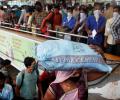
Six months after the lockdown was imposed, two dozen migrant workers were interviewed across five villages of Prayagraj. As the economy opens up, most of them are either hunting for a job or desperately waiting for a phone call from their previous employers. But the bruises of the lockdown are still fresh in their minds. Somesh Jha reports.
 © 2026 Rediff.com - Investor Information - Advertise with us - Disclaimer - Privacy Policy - Sitemap - Feedback - About us - Terms of use - Grievances